
The Truth Behind Roof Rot
Roofing by Bruce • May 12, 2015

May 12, 2015

Any kind of water penetration into a house allows the rapid growth of wood dry rot, molds and mildews. It is the rapid onset of molds and the later development wood rot or dry rot, which makes recovering houses that have stood in flood waters so problematic. It’s not so much the mud, garbage or silt that ultimately destroys the building as it is excessive moisture.

Dry Rot (which is actually several different species of wood-eating fungus) breaks down the inner fibers of the wood which causes it to become weak and brittle. For example, this is why some lumber is “pressure-treated” with fungus killing preservatives which will prevent or slow down most fungal growth. All treatments weaken with age and must be constantly reapplied.

But the root cause of all dry rot and mold is excess moisture. Water penetration from a roof leak , if allowed to continue unchecked will eventually increase the moisture and humidity levels in your home. Water not only seeps into wood but also into insulation and other building materials as well. Dry rot is such a big deal because the wood-eating fungus digests or absorbs the parts of the fibers that make wood timbers and beams both rigid and strong.

The wood damaged by rot is usually somewhat dry and crumbly in appearance, hence the nickname “dry rot”, although the fungus spores only thrive in a damp or moist environment. This in turn causes the areas of your home affected by dry rot to suffer structural problems such as weakening of load-bearing beams, rafters, ceiling and floor joists, girders and other critical building components.

It only takes a 20% moisture level for dry rot to begin “fruiting” and to start sending out fine, microscopic strands of grey fungus into surrounding fibers. And once established in an ideal setting, dry rot can grow as fast as 9 -10 feet in a year and pass through cracks inside brick! So an uninterrupted source of water, no matter how tiny, can quickly accelerate the spread of this woodeating fungus effectively destroying your home’s structure. So putting

White house corner with vinyl siding, roof eaves, and rain gutter against a blue sky
By Roofing by Bruce May 2, 2026
If you ask a lot of homeowners in Allentown what protects their home, most people will point to the roof. And they’re not wrong. But gutters do a whole lot more heavy lifting than people realize. When rainwater is not properly directed away from your home, it can lead to roof damage, foundation problems, siding […]
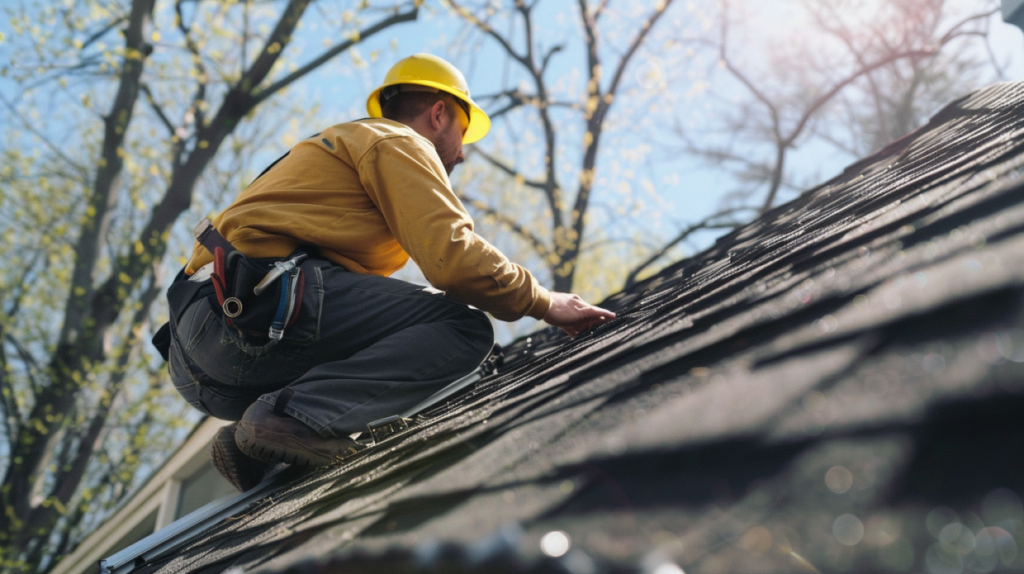
Worker in a yellow hard hat crouches on a sloped roof, inspecting shingles with safety harness attached
By Roofing by Bruce April 1, 2026
If you own a home in Allentown, you already know our winters don’t go easy on a roof. Snow, ice, freeze-thaw cycles, and heavy winds all take their toll. What you don’t always see from the ground is the damage left behind once the weather breaks. That’s where timing matters. A lot of homeowners ask […]

Close-up of a shingled roof with a gutter along the edge, beside a backyard fence and chair.
By Roofing by Bruce March 17, 2026
Spring in Pennsylvania is a welcome break from winter, but it also brings a different set of problems for your roof. Around the Poconos, it’s not unusual to see heavy rain one day, strong wind the next, and even the occasional late-season snowstorm before things finally warm up. After months of snow, ice, and freezing […]
Show More →